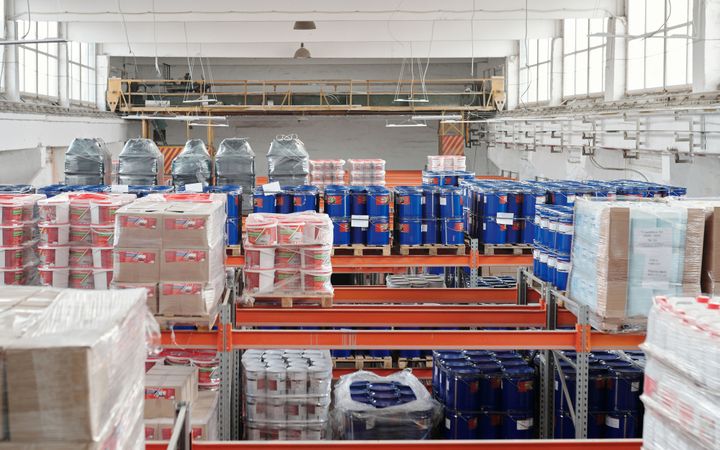
Auditing a third-party logistics provider
Even when your goods sit in someone else's warehouse, responsibility for records and control stays with you.
A company selling children's toys on a marketplace handed all its stock to a third-party logistics operator in the Tashkent region: no warehouse of its own, few staff. Each month the operator sends an Excel report, and it always says "everything matches". Then the seller dashboard shows that one model was marked "sold out" two weeks ago, while the company's own records still show 140 units of it. Goods in someone else's warehouse do not remove your responsibility: you still answer for the balance to the tax authority, the bank and partners. A 3PL audit tests trust extended from a distance with documents and a count.
Contract first, count second
If the operator will not allow inspection, the auditor is left standing at the gate. So the rights must be written down before work starts. The contract should include the following (agree the exact wording with a lawyer):
- the right to enter the warehouse and run sample counts on advance notice (say, 2 working days), with a shorter notice period where there is suspicion;
- the frequency and form of the stock report: once a month, as a file exported from the system;
- the permitted loss rate (as a percentage), and the price and deadline for compensating any shortage above it;
- no mixing of your goods with other clients' stock, rules for using subcontractors, and insurance.
Comparing three sources
The auditor puts three figures side by side: your records (1C or Excel), the operator's report and the physical count. The core equation is simple: opening balance + receipts − shipments + returns = closing balance.
An example. In one toy group the opening balance was 8,400 units, 3,000 units were received during the month, 2,760 were shipped against marketplace orders and 140 came back. Your records give 8,400 + 3,000 − 2,760 + 140 = 8,780 units. The operator's report says 8,655. The gap is 125 units, which at a unit cost of 45,000 so'm is 5,625,000 so'm. That is for one month and one group. The cause is not visible in the numbers; it has to be searched for in the movement log: part of the returned goods may be sitting in the operator's "under inspection" area and never reached the report, and two shipments may have been closed without being handed to a courier.
A gap does not always mean theft: it often comes from an unbooked return, a wrongly scanned barcode or a model mixed up at packing. Until the cause is known the auditor blames no one, but shows that the gap repeats monthly and where it builds up.
What to look for in the operator's report
- Whether the report is exported from the system or assembled by hand in Excel: a hand-built file is easy to adjust.
- Statuses such as "quarantine", "under inspection" and "damaged": the goods are somewhere, they are not on sale and they may not show in the report.
- The gap between the date a load arrived and the date it was entered in the system: for an item to show as "in stock" on the marketplace, it must be in the operator's system.
A one-day check on site
After reviewing the documents, the auditor goes to the warehouse. A typical plan:
- A sample count of 30–40 items in two directions: from the records to the shelf and from the shelf to the records. The second finds goods that are missing from the records.
- Checking that your goods sit in a separate zone or a clearly marked place.
- Establishing who has access, whether there is a log and what the cameras cover.
- Following several shipments through to the courier's signature.
- Finding out whether your representative can view the data in the system or only receives a finished report.
Common mistakes
- Treating the operator's report as the only truth and keeping no records of your own.
- Comparing only the total quantity: if one model is over and another is short, the total still matches.
- Counts attended only by the operator's staff, without your representative.
- Liability for shortages and the method of calculating it are missing from the contract, so in a dispute neither side has anything to rely on.
Conclusion
You can entrust goods to someone else, but you cannot hand over responsibility for the records. OmborAudit begins a 3PL review with the contract terms, then reconciles the three sources and runs a sample count on site, so you talk to the operator with figures you can support.